Day 8, Game update
Packs, wars and raids
How dogs in Marked play together. A local pack of up to 20, a Turf War with the pack next door every week, and Raids on a landmark.
Playing against other people was one of the ideas that came on the bench that first morning. When I told the story to the camera on 8 November I put it this way: "First of all, I thought, ah, it could be a multiplayer game." One dog can hold a few streets. A group of dogs who walk the same part of town can hold a neighbourhood, and they can try to take the next one.
Packs, Turf War and Raids were all in the first written plan, so the date on each card is 9 September, the earliest day that plan carries. All three are in the build our testers hold today.
Pack
Game update
Any dog can start a pack and others join by request; a pack's turf is its members' patches near the pack's home, and the most active walker leads.
A pack of up to 20
Any dog can start a pack. It gets a name, a banner colour and a home point, which is wherever its creator is standing when they make it. Other dogs ask to join, and the leader or an officer answers with Let in or No. A pack holds at most 20 dogs.
A pack's turf is every patch its members own within 5 km of that home point. A patch further out still counts for the dog that holds it, but not for the pack. That one rule keeps a pack local without anybody having to police it.
The leader is the member with the most walking minutes over the past week, worked out again at the start of every week. So the leader is whoever is out on the ground most. The dog that started the pack leads for its first 14 days, and a leader can name up to 3 officers to handle the join requests and the Raids.
Each pack has a card of its own, with its members' stats averaged. The plan put the consequence in three words: "Recruiting is strategy." A pack of quick dogs looks different on that card from a pack of dogs that never miss a day.
When I sat on the bench on 25 October and gave the camera a tour of the app, packs of up to 20 and Raids on a place were part of the tour.
Turf War
Game update
Each week, packs whose turf touches are at war, and the score is the contested patches each holds at Sunday midnight.

Turf War, every week
Turf War runs from Monday to Sunday on UK time. Two packs are at war when their turf touches at the start of the week, and a pack whose turf touches several others is at war with all of them at once. On the map a war shows as a banner, and the patches that are in dispute have a striped fill. Those are the contested patches: the ones right on the line, next to both packs' turf.
The score is how many contested patches each pack owns at Sunday midnight. Each member of the winning pack gets 50 points, and the pack wears a banner badge for the week. Each member of the losing pack gets 10. Like everything else a war pays, those are points, and points never turn into strength.
Two rules came later, both from questions I answered while we were building it. On 24 September I decided that a pack's war score is shown to its own members only, unless the pack chooses to show it to everyone, and only the leader can change that. From outside, a pack that keeps its score private looks exactly like a pack that does not exist. Public or not, the score names no dog, and patches near anyone's home are hidden there as they are everywhere else in Marked.
On 3 October I settled what a tie pays, which the plan had left open. Neither pack takes the badge, and every member of both packs gets the loser's 10. A war where nobody holds a contested patch at all is a tie at nothing each, and it pays the same.
Raid
Game update
A pack leader or officer names a landmark and a two-hour window, and every member dog that turns up adds to the pack's claim on it.
Raids on a landmark
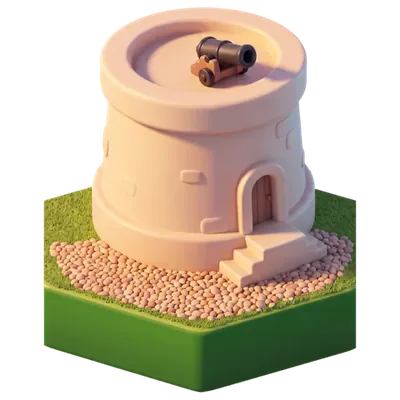
Landmarks are the named places on the map, such as the Martello Tower on the seafront. A pack's leader or one of its officers can declare a Raid on a landmark the pack does not already own. They pick a window of 2 hours, booked in advance and no more than a week out, and the Raid appears on the map. A pack runs one Raid at a time.
During the window, every member dog that spends at least 2 minutes in the landmark adds 30 to the pack's claim. If the claim is bigger than the owner's strength when the window closes, the landmark goes to the pack. The dog with the most strength among those who came holds it, and the pack is shown as its owner. Every dog that turned up gets 40 points, or half that if the Raid fails.
The plan had a one-line story for it: a pack leader declares a Raid for a Saturday morning, and the pack turns up. A Raid needs a place, a time and enough dogs who will be there together.
A Raid is also the only way to beat Old Tom, the ginger cat who holds Seaford Head, and he has a post of his own on day 14.
Day 9 is the other side of a game played on real streets: how Marked keeps your front door off the map.